MINDSET · MENTAL TOUGHNESS BOOK SERIES · 3
How to Handle Your First Negative Customer Comment
By Streamline Income · 4 November 2026 · 9 min read
You open your messages and there it is: your first unhappy customer comment. Perhaps a download did not arrive. Perhaps someone expected something your product does not include. Or perhaps the message is simply blunt: “This was a waste of money.”
It can sting, especially when you have put care into the work. But you do not have to solve the whole situation in the first few seconds.
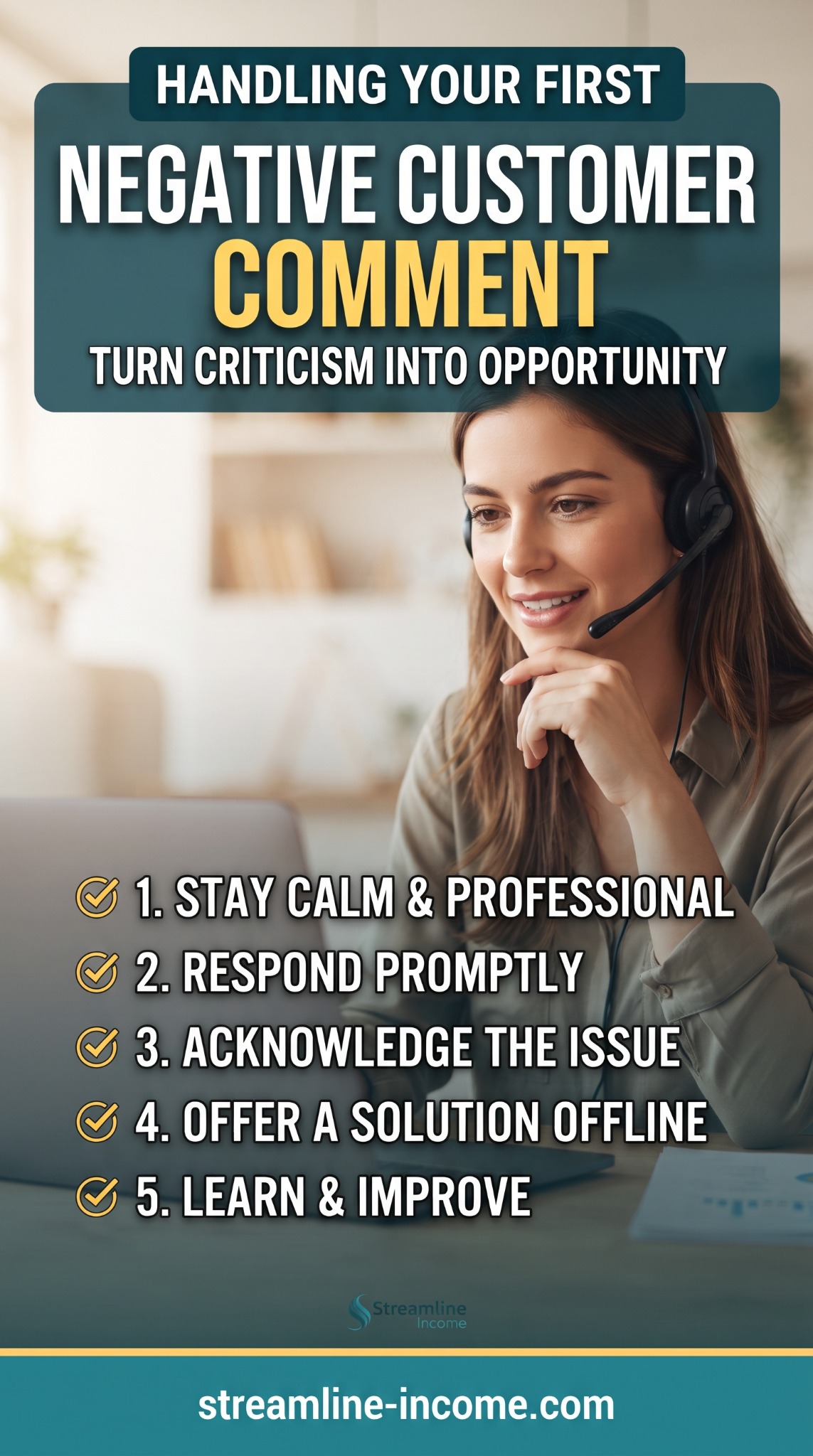
Our Pinterest pin offers five useful steps: stay calm, respond promptly, acknowledge the issue, offer a solution privately and learn from the experience. Let’s turn those steps into a response you can actually use.
This is article three in our Mental Toughness Book Series. The examples below are original business scenarios inspired by the broad themes of responding to setbacks and managing your reaction. They are not copied exercises from the book.
1. Pause before you press send
Your first reaction may be to defend the work or explain how much effort it took. Write that first response in a private note if it helps, but do not publish it straight away.
Read the comment again and identify the actual complaint. “The file would not open” is a problem to investigate. “You clearly don’t care” is an interpretation you do not need to debate.
Ask yourself three questions:
- What does the customer say went wrong?
- What can I check now?
- What information do I still need?
A brief pause gives you room to answer the issue rather than the tone. It should not become an excuse to leave a genuine access problem unanswered for days.

2. Check the facts without assuming the customer is wrong
Look at the product description, the file currently delivered and any relevant messages. Check the process from the customer’s point of view.
If the complaint is about a missing worksheet, open the actual download rather than relying on the version saved on your laptop. If a link fails, test the link the customer received.
You may discover a mistake, a confusing instruction or a difference in expectations. Each needs a slightly different response.
| Comment | First check | Useful response |
|---|---|---|
| “I cannot download it.” | The delivery link and access instructions. | Acknowledge the difficulty and arrange help through a private support channel. |
| “The file is missing a page.” | The version delivered to buyers. | Confirm any error and provide a corrected version or appropriate next step. |
| “I thought this included video lessons.” | The wording and images on the sales page. | Clarify what is included and review whether the page created a misleading expectation. |
| “This isn’t useful for me.” | The intended audience and the customer’s specific difficulty. | Ask a focused question and consider an appropriate resolution. |
You can acknowledge a frustrating experience while still checking the details. You do not need to accept an allegation as fact before investigating it.
3. Acknowledge the issue in plain language
Keep the first reply short, polite and specific. Show that you understood the problem and explain what happens next.
Here is a fictional example for a public comment about download trouble:
“I’m sorry you’ve had trouble opening the download. Please contact me through the support link on your order confirmation so I can check the file and help you access it. Please keep your order details out of this public thread.”
Use this only if that support route exists. Replace it with your actual contact method and avoid promising an immediate fix before you know the cause.
If you need time to investigate, give a realistic update point. “I’ll update you tomorrow afternoon” is useful only if you can honour it. If the investigation takes longer, send an update rather than letting the promise disappear.
Avoid replies such as “Sorry you feel that way” or “Nobody else has complained”. Neither tells the customer how you will address their problem.
4. Move private details into a suitable support channel
The pin says to offer a solution offline. For an online business, that can mean email, a private message or the support system used for the purchase. It does not have to mean a telephone call.
The purpose is to protect private information and handle the details properly. Do not post order numbers, email addresses or screenshots of private conversations in a public reply.
Ask only for the information you need. A customer should not have to provide passwords or full payment-card details to report a download problem.
Keep your public response helpful too. “Message me” on its own can feel dismissive. Briefly acknowledge the issue and explain why the private channel will help you investigate.
Once the matter is resolved, a short public update may be appropriate, without revealing personal details. Only say it has been resolved when you have a sound basis for doing so.
5. Offer a solution you can deliver
If your file is wrong, correct it and explain how the customer can obtain the updated version. If an instruction is unclear, provide a clearer explanation. If the product does not match the description, address that mismatch rather than arguing about what you intended.
Refunds and other remedies depend on the circumstances, applicable consumer rights and the terms of the selling platform. Check those requirements before giving a definite answer; a business policy cannot remove rights that apply.
For UK-facing sales, the GOV.UK guidance on returns and refunds is a useful starting point. The Consumer Rights Act provisions for digital content cover specific remedies. Avoid assuming that all downloads follow one simple “no refunds” rule.
Never make help, a refund or another remedy conditional on removing a negative comment. Resolve the underlying issue on its merits.
Keep a short private record of what was reported, what you checked and what you agreed to do. That makes follow-up easier if the conversation continues.
A complete reply when you have confirmed an error
Imagine you discover that the workbook download contains an older version with a missing page. A private reply might look like this:
“Thank you for pointing this out. I checked the download and found that the version you received was missing the planning page. I’m sorry for the inconvenience. I’ve attached the corrected file and updated the download. Please let me know if you have any difficulty opening it.”
Every action described in that example must actually have happened before you send it. If you have not corrected the file yet, explain the next step instead.
Notice that the reply does not contain a long defence of the business. It identifies the mistake, takes responsibility and explains the practical fix.
What if the comment seems unfair?
Respond to any clear factual issue calmly. If the product description accurately says “printable PDF” and the buyer expected a mobile app, explain the format without making the person feel foolish.
You might say: “This resource is a printable PDF rather than an app. I’m sorry the format wasn’t what you expected. Please contact support so we can discuss your difficulty and the available next steps.”
Then check the whole page. A technically accurate line near the bottom may not undo confusing images or a headline that suggests something else.
For abuse, threats, spam or comments you believe are fake, use the platform’s reporting tools and keep relevant records. Follow its moderation rules. A genuine negative opinion is not automatically abuse, and reporting a comment does not guarantee its removal.
You do not have to stay in a public argument. A clear response and an appropriate support route are often more constructive than repeated defensive replies.
🎄 Handle festive pressure with clear expectations
Christmas can bring gift deadlines, busy inboxes and customers who need an answer before you take time off. Check your support availability before promising a response time.
State holiday reply times clearly on the channels customers use. If you sell physical products, check current delivery information before making promises. For digital products, remember that automatic delivery can still lead to access questions.
If a customer complains during a planned break, acknowledge the issue when you can and give a truthful next step. Avoid blaming the festive rush or telling them they should have expected a delay you never explained.
Before your break, test important links and downloads. Our previous series article, The Boring Jobs That Keep an Online Business Running, includes a practical seasonal checklist.

Turn the feedback into one useful improvement
Once the immediate issue is handled, ask whether a small change could prevent it happening again. You might add a file-format note, replace an unclear screenshot or explain where the download link appears.
A single comment does not always justify rebuilding the whole product. Look for the specific problem and check whether the proposed change addresses it.
Our guide to delivering digital products automatically can help you review the customer’s journey. If the comment has knocked your confidence, handling self-doubt when you work for yourself offers a related perspective.
The pin’s message, “turn criticism into opportunity”, is an invitation to learn. It is not a promise that every complaint will become a glowing review. A fair resolution and a clearer process are worthwhile outcomes.
Frequently asked questions
How quickly should I reply?
Respond within the service expectations you have set and any applicable platform requirements. Prioritise urgent access problems. If you need to investigate, acknowledge the issue and give an update you can realistically deliver.
Should I delete the comment?
Do not remove genuine criticism simply because it is uncomfortable. For spam, threats or exposed personal information, follow the platform’s moderation and reporting process.
Should I offer a discount?
First identify what would resolve the problem. A discount does not repair a broken file or replace a remedy the customer is entitled to. Avoid offering rewards in exchange for a positive review.
What if the customer never replies?
Keep a record of your response and any action taken. Follow up reasonably where appropriate, but do not claim the customer is satisfied without evidence. Review any remaining issue you can fix yourself.
Your first response does not need to be perfect
It needs to be calm, accurate and useful. Read the concern, check what you know, protect private details and explain the next step.
One difficult comment does not describe your whole business. How you handle the issue is a practical opportunity to show care and improve the experience you provide.
Save to Pinterest · Share by email · Explore the Mindset collection