DIGITAL PRODUCTS · 8 MIN READ · 25 OCTOBER 2026
How to Use Free Giveaways to Build Goodwill and Drive Marketplace Sales
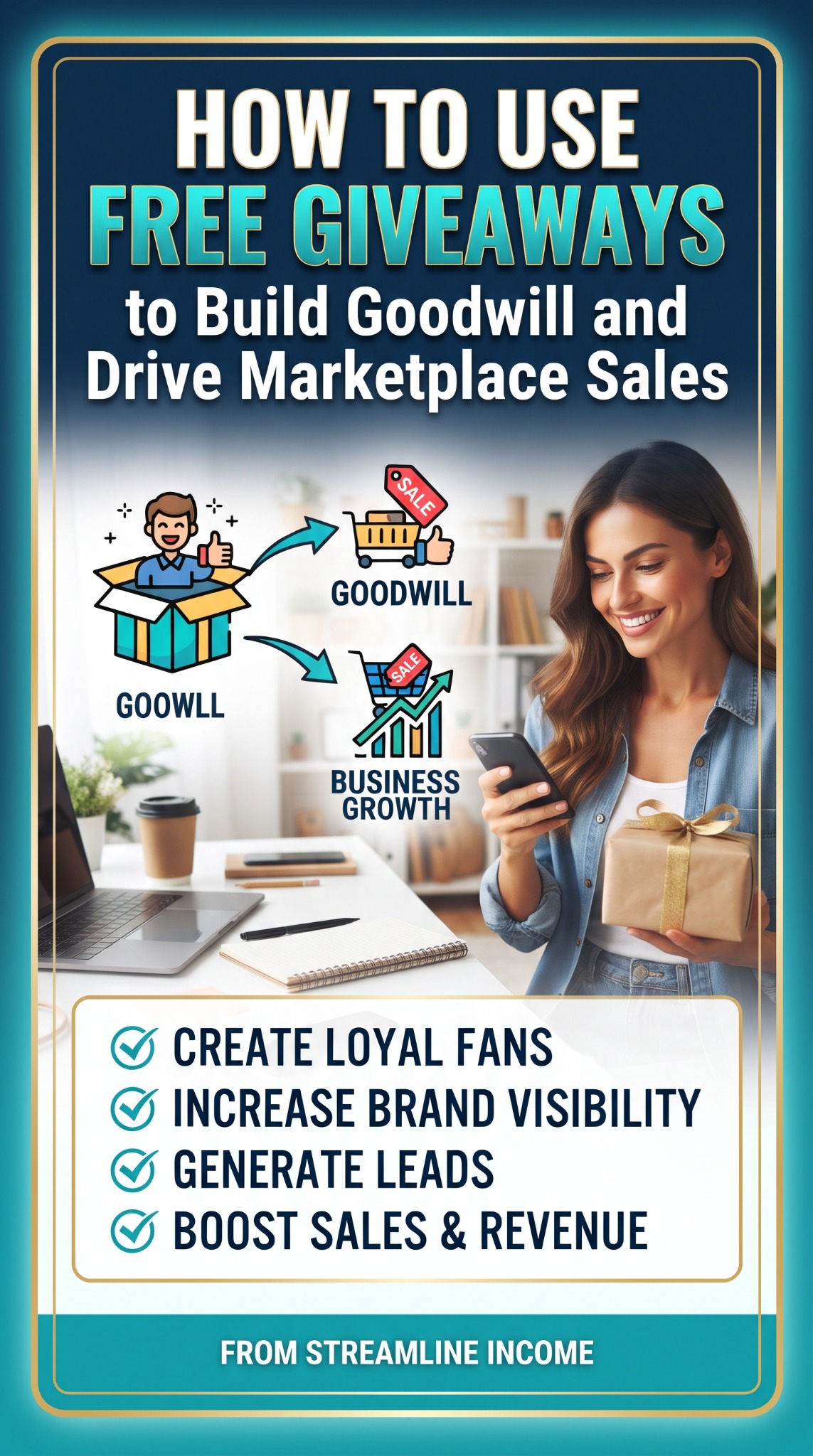
A free checklist can tell someone more about your work than a page of sales claims. They open it, use it and discover whether your approach makes their life easier. That small experience can build confidence before they consider buying a larger product.
Our Pinterest pin highlights goodwill, loyal fans, brand visibility, leads and revenue. The connection between them is not automatic. A giveaway needs to attract the right people, deliver something worthwhile and make the next step easy to understand. Here is a practical way to do that without creating a mountain of unpaid work.
🎁 Start with a useful gift, not a competition
Here, “giveaway” means a resource anyone in your intended audience can access, such as a printable, sample worksheet or short guide. It does not mean a prize draw with one winner. Competitions introduce different rules and administration, and a valuable prize can attract people who have little interest in your products.
For a beginner selling digital downloads, a small sample is often a manageable starting point. Choose a problem you already understand and solve one part completely. Someone should benefit even if they never purchase anything else.
Our free side-hustle starter guide is an example of providing an accessible starting resource without requiring an email sign-up. You can build goodwill through useful content without building a mailing list.
Choose the paid product before creating the freebie
Start with the customer and the problem your paid product addresses. Then identify a smaller task that naturally comes before it. If you sell a household organisation bundle, a one-page weekly reset checklist makes more sense than an unrelated business planner.
Try this sentence: “My free resource helps someone do ___; my paid product helps them take the next step by ___.” If the connection feels forced, change the giveaway before spending time designing it.
| Free resource | Complete small win | Optional paid extension |
|---|---|---|
| Weekly content planner | Plan one realistic week | Editable planning and review bundle |
| Product listing checklist | Review one listing for missing information | Listing workbook with worked examples |
| Simple project tracker | Organise one project | Multi-project spreadsheet with instructions |
These are illustrative pairings, not claims about market demand. If you are still deciding what to sell, our guide to digital products beginners can create will help you choose a manageable format.
Make the free version genuinely usable
Keep the first version small: perhaps two pages containing a finished example and a blank template. Add clear instructions, readable type and a descriptive filename. Check that it opens on a phone and prints without cutting off important information.
Do not deliberately remove an essential step to force a purchase. A weekly planner should work for a week. The paid version might add editable layouts, monthly reviews and additional examples; it should expand the usefulness rather than repair a broken free product.
Use your own material or assets you have permission to distribute. Include a short usage note explaining whether the recipient can print copies, adapt the file or share it. Clear boundaries are more useful than vague “free to use” wording.
🔎 Choose a delivery route that fits your shop
A direct download on your own website offers a simple experience. A visitor reads the description and downloads the file. There is no need to collect contact details if your goal is to introduce your work and help people discover a relevant shop listing.
Payhip offers another route. Its free-product instructions explain how to set a digital product's price to zero. Digital customers provide an email address but do not enter payment details. Payhip also says sellers must connect a payment processor even for free products.
Do not assume every marketplace supports the same setup. Etsy's off-platform transactions policy prohibits using free items or discounts to encourage members to purchase outside Etsy. Keep an Etsy-originated purchase on Etsy; do not use a freebie as a route around its checkout.
A practical approach is to promote your own website's free resource to your existing website or Pinterest audience, then link interested readers to the relevant marketplace listing. Check the current rules for every platform involved before launching.
Build one clear bridge to the paid product
Place a short, optional next-step note at the end of the free file. Explain exactly what the paid version adds. For example: “If this weekly planner suits you, the full bundle includes editable monthly planning pages and completed review examples.” Follow it with one relevant product link.
Avoid “You owe us a purchase” language. Goodwill comes from helping someone freely, not creating a sense of debt. Also avoid an invented expiry date or an exaggerated value claim attached to a resource that has never been sold.
Your product listing should show the actual contents, file formats and any software required. Our guide to writing a sales page without aggressive hype explains how to make the offer clear. Keep the free and paid files visually consistent so people recognise the same creator.
If you are comparing broader business resources, you can also view our featured ClickBank offer (affiliate link). It is optional; you do not need to buy it to try this approach.
Promote the result, not just the word “free”
“Plan next week's three priority tasks” gives a reader more information than “Amazing free download”. Use your article, Pin description and download page to explain who the resource helps and what they can do with it.
Create a few distinct, accurate angles around the same resource: planning around a day job, choosing weekly priorities or keeping a small project moving. Send visitors to a page that matches the promise. Do not disguise a paid checkout as a free download.
For a sustainable approach, connect this activity to your weekly content routine. One useful resource and a few thoughtful promotions are easier to maintain than a new giveaway every day.
Treat email sign-ups as a separate choice
An address supplied to deliver a file should not automatically become permission for ongoing promotional emails. If you want newsletter subscribers, explain what you will send and use a clear, optional sign-up choice.
The UK ICO's electronic-mail marketing guidance explains consent and limited exceptions. Do not assume a free download qualifies for an exception. Identify yourself and make unsubscribing easy. Readers who prefer not to subscribe can still become customers later.
📊 Measure useful actions, not download totals alone
Track visits to the giveaway page, downloads where measurable, clicks to the paid listing and attributable purchases where your tools allow. Marketplace reports may not connect every purchase to a specific download, so record those gaps rather than inventing certainty.
Imagine 200 page visits, 60 downloads, 12 listing clicks and two attributable £12 purchases. That is £24 gross revenue before fees, refunds, taxes and your time. These invented numbers demonstrate the calculation; they are not a forecast or an expected conversion rate.
Ask what each stage suggests. Few downloads could mean an unclear promise. Downloads without listing clicks could indicate a weak connection to the paid product. Listing clicks without purchases might justify checking the offer, but a tiny sample cannot prove the cause.
Set a small time budget, run one version for a few weeks and change one thing at a time. Include support time in your review. A giveaway that brings constant troubleshooting but little useful engagement may need simplifying.
Conclusion: earn trust through one small result
A strong giveaway demonstrates your standards before asking anyone to spend money. Make it relevant, complete and easy to use, then offer a sensible next step. Sales are a possible outcome, while the immediate promise is something you can control: a resource that does what you said it would.
Frequently asked questions
Will free products stop people buying my paid bundle?
Some people only need the free version. Make the paid bundle's additional usefulness clear, and judge the approach through actual results rather than assuming every download represents a lost sale.
Do I need an email list?
No. A direct download and an optional link to the relevant product can support this approach. An email list adds responsibilities and should serve a clear purpose.
How big should my first giveaway be?
Large enough to solve one specific problem. A well-tested page or two can be more useful than a long guide that takes weeks to produce.
Should I ask for a positive review in return?
No. Give the resource without making praise a condition. Invite optional feedback to improve it, and check the marketplace's review rules before running any review-related promotion.
Explore the featured business resource
If you want to compare further learning options, review the offer's contents, current price and terms before deciding. No earnings are guaranteed.
View offer and purchase optionsAffiliate link: we may earn a commission if you purchase.
Share this article
Know someone who would find this useful?